Table of contents
Missed a turn, followed a side road, and suddenly the trip feels more alive. In an era of hyper-optimized itineraries, spontaneous detours are making a quiet comeback, and not just among backpackers. Recent travel surveys show many travelers now prioritize “unexpected experiences” over ticking off landmarks, while destination managers warn that overtourism is pushing visitors to disperse. The result is a new kind of travel rhythm, where a wrong exit can lead to the right memory, and where the best story often begins off-plan.
Detours rewrite the trip’s emotional map
One unplanned turn can change everything, and not because it saves time. Travel researchers have long noted that people remember peaks, surprises, and endings more vividly than the steady middle, a pattern popularized by the “peak-end rule” in behavioral science, and detours are essentially surprise engines. They break the script, force a micro-decision, and create a feeling of agency that many tightly scheduled trips quietly erase, especially when every hour is pre-booked, every restaurant pre-selected, and every viewpoint pre-certified by social media.
That emotional effect is now measurable in the way travelers describe satisfaction. In a 2024 survey by Expedia, a large share of respondents said they value experiences that feel “unique” and “local” over standard sightseeing, while Skyscanner’s 2024 Travel Trends reporting also emphasized a growing appetite for “hidden gems” and less predictable journeys. Those phrases can sound like marketing, but they reflect a real shift: a detour often produces a sense of discovery because it is not pre-approved by the algorithm, and that matters more than ever when many destinations feel visually familiar before you even arrive. A street you did not plan to walk, a café you did not bookmark, a lookout you found because you were lost, these are the moments that re-personalize travel, and they tend to become the stories you tell first.
Detours also change who you meet. Stray from the main route and you are more likely to interact with residents who are not performing for visitors, because you are suddenly in places where English menus are not guaranteed, where opening hours are flexible, and where directions come from a person rather than a map. It can be mildly inconvenient, yet it creates a social texture that curated tourism frequently lacks. The irony is that many travelers spend money to “feel authentic,” while the simplest pathway to that feeling can be a spontaneous choice made in the moment, without any purchase at all.
Overtourism pushes travelers off the beaten path
The detour trend is not only personal, it is structural. As crowding intensifies in major hubs, more travelers are nudged toward secondary routes, sometimes by choice, sometimes by necessity. Venice’s day-tripper fee, introduced in 2024 on peak days, is one of the most visible policy signals that iconic cities are trying to manage volume, and similar debates are unfolding from Barcelona to Amsterdam. When the main corridor becomes expensive, congested, or restricted, curiosity naturally shifts to what lies beyond it.
Governments and tourism boards are also actively encouraging dispersion. The logic is straightforward: spreading visitors across regions reduces pressure on historic centers, improves resident quality of life, and helps smaller communities capture tourism income. Japan, for instance, has repeatedly promoted travel beyond Tokyo, Kyoto, and Osaka, while many European countries invest in regional rail, cycling routes, and cultural programming designed to draw visitors away from the postcard core. Even in destinations without headline-grabbing policies, the practical reality of queues, timed entry slots, and sold-out hotels is pushing travelers toward alternative towns, shoulder seasons, and last-minute pivots that look, from the outside, like spontaneous detours.
There is an economic dimension too. According to Eurostat, accommodation prices in popular European cities have remained elevated compared with pre-pandemic patterns, and travelers respond by looking for value in smaller places, where meals, rooms, and transport can be cheaper, and where the experience feels less transactional. A detour can therefore be both a budget decision and an emotional one, especially when a family realizes that one night outside the tourist nucleus buys a better hotel, a calmer dinner, and a morning without crowds.
Yet dispersion has its limits. A sudden influx of visitors can strain small communities, and a detour that becomes a viral “hidden gem” stops being hidden quickly, which is why responsible travel habits matter. The best detours respect local capacity, avoid trespassing into fragile natural areas, and treat quiet neighborhoods as places where people live, not as backdrops. Spontaneity works best when it is paired with awareness.
How to detour safely without losing the day
Spontaneity does not have to mean chaos, and the smartest detours are built on small, practical safeguards. Start with the clock: set a hard “return-to-plan” time, and treat it like a flight departure. This one boundary preserves freedom while preventing the classic detour spiral, where a quick look turns into a late arrival, missed reservation, or night drive on unfamiliar roads. If you are traveling with others, agree on the rule before the detour begins, because decisions feel different when someone is hungry, tired, or worried about the next hotel.
Then consider infrastructure. In many countries, mobile coverage drops outside main routes, so download offline maps in advance, and save key addresses in a notes app. If you are driving, keep fuel in mind; in rural areas, stations can close early or be spaced far apart, and that is especially true outside summer peaks. Weather changes faster in mountains and coastal roads, and a scenic turn can turn risky with fog, heat, or sudden rain, so check local alerts, and avoid “shortcut” roads that locals warn against. The goal is not to fear detours, it is to make them resilient.
Money matters as well. A spontaneous stop often means small cash purchases, parking fees, or entry tickets, and not every place accepts cards. For travelers watching their budget, detours can be surprisingly cheap if you lean into free experiences: viewpoints, markets, short walks, or a simple meal in a village café. The more expensive detours are usually the ones driven by scarcity, such as last-minute hotels, taxis when public transport stops running, or paid attractions you only do because you are there. Plan a modest detour fund, and you will be less tempted to say no to a good surprise.
Finally, keep your safety and ethics intact. Do not chase “secret spots” that require crossing private land, and avoid geotagging fragile locations. If a detour leads you into a residential area, lower your volume, respect parking rules, and remember you are a guest. The best travel stories age well when they do not come at someone else’s expense.
When a detour leads to a new country
Sometimes the best detour is not a side street, it is a different destination altogether. Travelers who start with an overbooked classic often end up choosing a nearby alternative that delivers the same emotional payoff, with fewer crowds and a stronger sense of discovery. That is how itineraries evolve: someone plans the obvious, hits friction, and pivots toward the less obvious, then wonders why they did not start there.
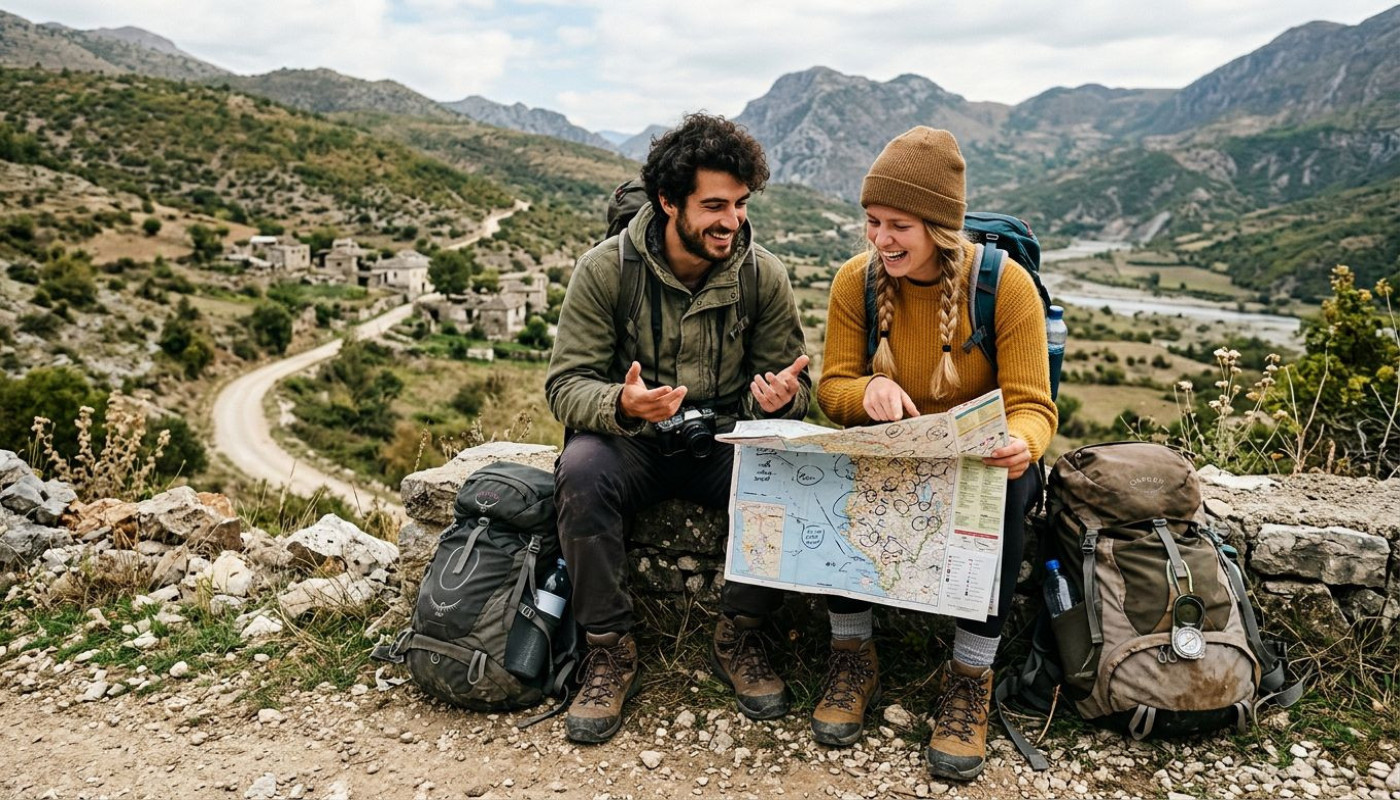
This is where the Balkans, and particularly Albania, have drawn growing attention. The country has seen a surge in international arrivals in recent years, helped by improved infrastructure, competitive prices, and a coastline that appeals to travelers priced out of more saturated Mediterranean hotspots. But Albania’s appeal is not only the beach; it is the feeling that a detour still means something, because you can move from Ottoman-era towns to alpine landscapes in the north, and then down to the Riviera, without the sense that every corner has already been packaged for you.
For travelers considering a pivot, practical information becomes the difference between a good detour and a stressful one, especially around transport, border crossings, driving conditions, and seasonal planning. If you are weighing that kind of leap, discover this info here, and use it as a starting point to map what is realistic for your timeline, your budget, and your appetite for improvisation. A country-level detour works best when you keep one or two anchors, such as the first night booked and the main route sketched, and leave the rest flexible enough to follow weather, recommendations, and your own curiosity.
The payoff can be disproportionate. A last-minute decision to spend two days in an unexpected town, to take the scenic road rather than the fast one, or to stay longer because a local festival happens to be on, these are the choices that create the sensation of having traveled, not just visited. And when you return home, those are the moments that resist compression into a highlight reel, because they remain textured, personal, and slightly unrepeatable.
Practical next steps before you go
Lock in the essentials, then leave space. Reserve your first accommodation, set a daily spending ceiling, and keep a small buffer for transport changes or an extra night if a detour deserves it. Check whether local or national tourism schemes offer museum passes, regional transport deals, or seasonal discounts, and build your route around flexibility, not perfection.
Similar articles